Showing posts with label Educational. Show all posts

Friday, June 24, 2016

when the end justifies dessert.

I've never been very good at math. Or baking. But that doesn't mean a gal like myself can't appreciate eating pi. Get it? Anyways. How to Bake Pi: An Edible Exploration of the Mathematics of Mathematics by Eugenia Cheng uses recipes as a metaphor for math and explores different math concepts (and yummy desserts) one chapter at a time. She also talks about herself, which brings a realness to the book and makes it more than just a collection of recipes or math lessons. If you want to know what a quadrilateral is, but also how to make homemade hollandaise sauce, this is the book for you.


If you don't care about what A + B equals (C, duh), well, a ton of smart kids ready to take on the world have graduated recently, give them this book at their graduation party, they'll think it's cute.

Friday, March 11, 2016

technology, education, and reading.

As an English teacher who substitute teaches during the year, and teaching summer school during the summer, Lit Up by David Denby was exactly what I need to gear up for another summer with the neighborhood slackers. And I can say they are slackers because none of them have documented learning disabilities. They are just plain lazy and unmotivated. And being the reading lover that I am, I want all of my students to find the pleasure in it that I do. Which is exactly what Denby's book is about.

Set in very different tenth grade English classrooms, Danby explores these questions. How, in a social media obsessed world, do we establish in-class reading for pleasure? Are we reading the right books to allow students to connect emotionally to the text? Are we in need of better educators? Danby and his subjects (well reading is the subject, but you get what I mean) answer these questions and more as he finds the twenty-four books that can turn any nonreader into a reader. And I cannot wait to utilize his advice in summer school.

Tuesday, November 10, 2015

make time for number talks.

I do think parents are hesitant to teach their children math because of all of the recent changes with Common Core. They don't want to confuse their children even more by attacking problems differently than their teachers. And I get that. Many parents have never heard of Number Talks, or how highly effective they can be in helping your child develop a deeper understanding of the math they are learning. Making Number Talks Matter can help.


In Making Number Talks Matter, Cathy Humphreys and Ruth Parker offer practical ideas for using Number Talks to help students learn to reason numerically and build a solid foundation for the study of mathematics. In the very first chapter they explain what Number Talks are and why they are important. Number Talks are when children solve problems in their heads and then talk about the strategies they used. Students are constantly mixing up rules because they are so busy trying to memorize one way to solve a problem, and when they forget, they get the problem wrong. Number Talks show children that it's OKAY to solve math problems in different ways. There are a lot of examples in this book on how to use Number Talks in all grade levels. Math is such a struggle in our country, adding something as simple is Number Talks is worth a shot.

Monday, September 14, 2015

the latest in english lit.

Before I get started on my review of Estelle Rankin's 7th Edition, 5 Steps to a 5 AP English Literature 2016, I want to make sure you all are aware of the purpose of this exam. 1. your child is planning on going to college. 2. your child is interested in majoring in arts and humanities at said college. If neither of these apply to you, do not have your child take this exam because it will honestly be a big fat waste of your time, unless they are going to Harvard. Now, if they are planning on majoring in arts or humanities in college, PLEASE pick them up a copy of this test prep book. You won't be sorry because this is not an easy exam, and the 5 Steps to a 5 books are the absolute best.


5 Steps to a 5 AP English Literature 2016 is fully revised, and will fully prepare your child for the AP Literature exam by tackling the sections one by one, and outlining everything your child needs to prepare for including what to read before taking this exam. Important things I noticed? The exam does not give you relevant quotes or summaries of the works you can write about for one of your essays, so you need to be super familiar with a couple of major books before you begin. Literary devices should also be memorized. Multiple choice question anxiety will be ever present during this exam, taking a chill pill should cure it right up. You're welcome.

Thursday, August 27, 2015

if you want to major in gambling.

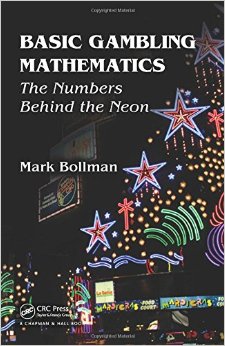
I will never forget my first time in a Vegas casino. I walked right up to an employee and said with confidence, "can you please tell me where the Russian roulette table is?" And I was not kidding. I honestly thought that roulette was called, Russian roulette. He gave me the strangest look and responded, "we don't do that here". Needless to say I was super confused until I explained the encounter to my girlfriends and they took away my right to be anywhere by myself except for our hotel room. That was my first brush with real gambling, other than the horse races in my small town where I would bet $2 to place. Maybe it was fate that I received Mark Bollman's Basic Gambling Mathematics: The Numbers Behind The Neon when I did, just in time for labor day at the racetrack.


The whole idea of Bollman's book is to explain to readers the mathematics involved in analyzing games of chance such as casino games, horse racing, and lotteries. It is very much a textbook that focuses on probability and statistics, not necessarily how to win regularly at your gambling drug of choice. I don't imagine readers becoming the next Rain Man by reading this book, but it's definitely interesting.

Monday, March 23, 2015

theory into practice.

I have a lot of friends who teach early childhood education, and I am beyond excited to pass on Pedagogy and Space: Design Inspirations for Early Childhood Classrooms by Linda Zane to each of them! With all of this Common Core drama, it's nice to see a book go back to the basics. I assure you, classroom design DOES matter, and it DOES affect the children in your room and how they learn. I cannot emphasize enough the importance of a comfortable learning environment. Zane has collected pictures of some of the best classrooms I have ever seen, and you can feel free to copy! It's all about collaboration, people!  Each reflects a different educational approach/learning program, so you are bound to find one that fits your style. My favorite? The Waldorf Educational Approach, hands down. The learning spaces promote fantasy, imagination, and creativity. ALL of my favorite things. And Zane makes putting theory into practice so easy!

Thursday, January 15, 2015

how to not appear dumb 101.

Did you know that teachers stop teaching grammar to students when they reach high school? I mean, it could be middle school, but when I taught ninth grade no one wanted me to touch on grammar. It was pretty much, if they don't know it by now, they are a lost cause. I mean, WHAT? The Regents exam for English doesn't even grade for grammar. If your essay portion reeks of misspelled words and run on sentences and your instead of you're, no one cares! I still can't handle it, so I am taking a stand and review my new favorite grammar resource, Grammar Smart, 3rd Edition by the very prestigious Princeton Review.


In an interview, if you don't speak properly you will not get the job. In college, if you don't write properly you will not get a 4.0. That's where Grammar Smart comes into play. In this book you will master the art of writing and speaking. If you're feeling lazy, at least take a look at the punctuation section, even I got something out of that. There are lessons,and quizzes for you to practice. If you or your child has a noticeable grammar deficiency, because saying you sound dumb would be rude, this is absolutely the resource for you.

Monday, January 12, 2015

debunking assuptions and unrealistic theories about teaching.

We are all teachers. Parents, big brothers, little sisters, cousins, grandparents, etc. etc. At some point in our lives we will be put in the position to teach something to someone else. Probably more than twice. Vanessa Rodriguez with Michelle Fitzpatrick discuss how teaching is a cognitive skill AND what it actually takes to become an expert teacher in their book titled The Teaching Brain: An Evolutionary Trait at the Heart of Education.


These ladies begin at the beginning. What is teaching? A human and evolutionary skill, whether you decided to pay the ungodly amount of money to get your masters to be a teacher, or not. Among other things. Also touched upon is how schools take that natural relationship between teacher and learner away in the classroom with all of their crazy rules and state tests. As a teacher who finds Common Core and the idea that teachers should be "graded" based upon student performance on state mandated tests, ridiculous, I found this book to be a great read. I was right there with Rodriquez when she discussed her first year of teaching and how she was told to hold her passion back, ask comprehensive questions, and basically leave your creativity at the door. My first year ruined teaching for me. I vote Rodriguez for president of educational reform so that maybe I can love it again.

Monday, December 15, 2014

the engineering revolution.

I don't know much about the engineering education crisis our country is facing today, I'm too overwhelmed with my own Common Core crisis, and being a teacher in general is just fricken hard right now. But the struggle is real for these engineering programs at the high school and college level, and reform is on the rise thanks to educators, David E. Goldberg and Mark Somerville, and their book A Whole New Engineer: The Coming Revolution in Engineering Education.


Transforming engineering education is a must because of the change of times. Curriculum needs to be updated to roll with the punches of the 21st century. We are doing no favors to future engineers or their employers if we don't make a change, and that is what this book is all about. Whether you're a parent of a child interested in engineering, a student, an educator at BOCES or college, it is your responsibility to acquire the tools needed to get students ready for the real world of engineering. A Whole New Engineer includes pilot programs, five pillars of engineering educational transformation: joy; trust; courage; openness; and, connectedness, collaboration and community, and other strategies that will unleash student potential. This resource will improve undergraduate education in engineering if you'll only let it.

Tuesday, May 27, 2014

if it's not broke...

It has been stated time and time again that America has one of the poorer public education systems in the world. David C. Berliner and Gene V. Glass don't agree, and are here to bust open all of the myths attached to public school's in this country in 50 Myths and Lies That Threaten America's Public Schools.


The first myth is that America scores low on international tests, when really international test scores are poor indicators to use in ranking the quality of national education systems and even worse in predicting future national prosperity. Their words, not mine, but it makes sense. Poverty is an issue as well. America has a much higher poverty level than the country's that are scoring higher on these tests, so averaging out the scores, of course we are going to be lower.

The main idea of this resource is that the public education system is being accused of failing based on lies and myths that have nothing to do with the SYSTEM itself. It has to do with silly tests, parents who don't take the time to educate their children for whatever reason, WAY too much homework, among many others. A bunch of people in Albany, and other state capitals think they know best when it comes to America's public education system, when really they are trying to fix a system that's not even broken. Well, it wasn't anyway, until they got their hands on it.

Monday, April 7, 2014

shattering some myths.

African Americans have always had a sort of attachment to firearms. I understand that this may sound racist to you at this specific moment, but just wait until you read the book I'm reviewing, you'll realize that my statement was super scholarly.

In his well-researched book, Negroes and the Gun: The Black Tradition of Arms, law professor and author Nicholas Johnson shows us the importance and cost of self defense as he takes us back in time, chronicling the use of arms by Black people throughout US history, especially in the South.


Black people and guns have been getting a bad rap for decades. Johnson documents, time after, time how enslaved Africans and fugitive Africans would fight their way to freedom with guns. How they had an underground market to buy, and or steal these guns. How these guns and their willingness to use them allowed many enslaved Africans to get to Free States. The history of the fight against slavery and the civil rights struggle has been modified and right of self-defense, political violence has been minimized. We live in a time where everyone can agree that enslaving people was completely disgusting and wrong, so did it take Professor Johnson to really open our eyes to the Black perspective in history as well as today? Johnson doesn't condone street violence in Black communities, he gives a compelling argument for the right to own arms by law abiding citizens.

Monday, January 6, 2014

be objective while reading.

Just when you thought everything about the Cambrian Explosion has already been said, in walks Stephen C. Meyer with Darwin’s Doubt: The Explosive Origin of Animal Life and the Case for Intelligent Design. Trained in philosophy of science at Cambridge University, Meyer challenges Neo-Darwinist theories of undirected/unguided evolution. I have no opinion on the subject; I am here to tell you that this is a solid scientific review and a goldmine of information. Whether you agree with the author or not, Meyer’s research is impeccable, there is no argument.  Darwin’s Doubt is a must-read for any graduate or undergraduate student who is interested in getting up to speed with the latest in ID thinking and research.


Thursday, October 17, 2013

education system comparisons, oh boy.

In the US, we are not known for our public education system. I mean, we have Yale and Harvard to brag about, but even our elite schools fall short compared to other countries. Amanda Ripley, investigative journalist wrote a book on educational policy that will shed some light on what we are missing here in America when it comes to education.


Smartest Kids in the World: And How They Got That Way is jam-packed with research and storytelling that will surprise you. The main purpose of this book is to show a more personal side to education in other countries. Readers gain a real life student view of what the education experience is like in Finland, Poland, and South Korea - three countries that score highly on standardized international tests, by following three American high school students in their exchange school experiences in these three countries. Ripley also includes research about other countries, and makes a compelling argument for educational reform.

Thursday, June 27, 2013

i wish i read this before college.

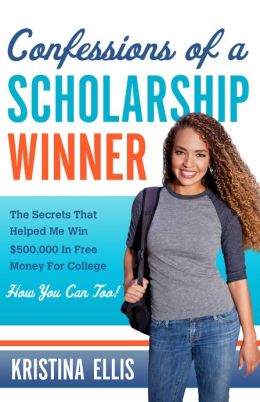
Confessions of a Scholarship Winner by Kristina Ellis should be in every high school guidance office in America. Seriously, this chick got her PhD through SCHOLARSHIPS. Completely paid for. Please do not be discouraged by the fact that Ellis is a minority, and also came from an impoverished background. These factors did not get her all of her scholarships, you'll see as you read that Ellis' hard work and persistence are what got her to where she is.


In this resource, Ellis gives us her personal success story, and also spells out how to go after scholarships of all sizes. She includes how to write essays; what to concentrate on, and how to make every word count. How to write resumes, and make yourself stand out. Ellis didn't have outstanding grades or test scores, she was pretty average academic wise. Many students who are not in the top 10% of their classes think that scholarships are out of their reach, Ellis proves that is not always the case.

Now is the time to grab a copy of Ellis' story, take her advice, and start pursuing the scholarships that are right for you (or your kids).

Monday, April 22, 2013

poetry for every content.

I love the idea of reading and writing workshops. We don’t really have an equivalent to them at the school I work at, but I absolutely think that we should. I have seen these workshops in middle schools, but never at the high school level, which needs to change. Lynne Dorfman and Rose Cappelli have created a mentor text which shows how to use poems in both reading and writing workshops and across content areas titled Poetry Mentor Texts: Making Reading and Writing Connections, K-8.


This text is a collection of lessons devoted to making reading and writing connections through poetry. The authors include a number of different styles of poetry in every chapter, along with a basic lesson using that poem laid out for you. Included are poems that help students reflect on their own lives and poems that inspire response.
Each poetry lesson includes a writing connection, for example: Why did the author choose the words they did? Each poetry lesson also includes a reading connection, for example: Understanding the structure of a poem to help reading comprehension. This helpful resource contains ideas on how to use guided practice, independent reading, and student reflection while using poetry as well. Poetry Mentor Texts is perfect for elementary school teachers.

Wednesday, April 10, 2013

english teaching lovers only.

I have been a huge fan of Cris Tovani since I decided I wanted to become a teacher. I’ve read her numerous books on engaging students in reading and helping them respond to literature more effectively. Many of her strategies have been used during my first year of teaching. So you can imagine how ecstatic I was to receive her latest DVD Talk to Me which comes with a very helpful viewing guide on CD-ROM.


Tovani’s main focus in this DVD is to show how she uses conferring (or conferencing) mostly one-on-one with students, and monitors their progress while they read books of their choice. Tovani plans her lessons so that after her classes read a required text they spend three weeks working on “free choice” readings. She brings up the idea that these required novels teachers must get through every year typically focus around literary elements rather than the other important aspects of reading like fluency, stamina, comprehension and vocabulary. She made an interesting point. I focus primarily on literary elements in my 9th grade class because they will need to be able to remember them for the Regents exam in 11th grade. I don’t have much time to sit down with each student and track data like comprehension, fluency and stamina while reading.

When Tovani confers with students throughout a reading workshop she is able to track their progress by asking them questions, but mostly letting her students do the talking and telling her what they need. She takes the time to help students find choice texts that fit their needs, especially for lower level and higher level readers. Tovani also includes a letter writing workshop she completed with her 11th graders where they worked on figuring out how to write for their specific audience. She gave students models of letters to look deeper into what writers do and how they grab the reader’s attention.

Tovani’s goal is to ensure that her students are getting smarter every day. She is looking for students to construct personal meaning for themselves while they read. Look deeper into a text more naturally, relate to themselves to the characters, etc. She wants them to learn to write for themselves and read for themselves, not for her. Tovani makes her students more responsible for their learning, which is what we need to do at the secondary level. There is so much more that this DVD has to offer that I haven’t even touched on in this review. I highly recommend it for the English teacher looking to engage every student in reading and writing.

Saturday, March 2, 2013

where are the four big ideas?

Contrary to popular belief, there are a few smart kids strolling around farm schools like the one I work at, so when a few students in my study hall told me they were looking to ace the AP Bio exam, I knew I had to work my magic. I am the queen of resources, a kid at school is cramming for a final or a crazy hard exam? I've got a book for that.


I typically look to the Princeton Review for help in the book department because they never EVER let me down, but there were a few issues with Cracking the AP Biology Exam, 2013 Edition (Revised) (College Test Preparation). To be honest, this book is missing some key components of the NEW AP Bio exam. It's a great Biology resource, but without the updates, a kid may not get much out of it for the actual exam. Sorry Princeton Review, I have high hopes for the 2014 model!

Tuesday, July 3, 2012

teaching formulaic writing.

I will never forget how difficult it was to teach an essay during my first student teaching placement in an eighth grade ELA classroom. It was like pulling teeth to get those kids to put pen to paper and write. At the end of each of the three days it took to get through the process, I asked myself, are you SURE you want to be a teacher? Yes, it was that bad. It was my first time ever teaching writing, I was super discouraged, and drank A LOT of wine after grading those essays. Since then, I am constantly on the look out for any books that can help me teach writing. I have found a lot of useful strategies in Kimberly Hill Campbell and Kristi Latimer's Beyond the Five-Paragraph Essay, so I thought I'd share a few with you all. You're welcome.


Firstly, I really like the idea of requiring students to reflect on the writing process after certain assignments. The idea in the book is to assign this after a conclusion-free writing assignment is due. Another strategy includes crafting a thesis and defending it verbally, oh my god. Most of my eighth graders could not grasp the concept of a thesis. If I would have made each of them argue theirs verbally, I know they would have understood it after a little back and forth with another student. Light bulb.

Part of the problem with the writing assignment that I gave during my student teaching was that it had to be so damn structured. I hate that. I don't want my students to constantly see writing as rules, rules, rules, or as a test to pass, I want them to see writing about literature as a way to capture their thinking about literature. Stole that from the book. A lot of the ideas in this book are ones I have heard before, or have developed versions of in my own mind. The strategies are what makes it worth the cash, there are dozens, and the whole Reading like a Writer chapter is filled with useful ideas on helping students developing responses (to write down) as they read. I see new teachers (like me) getting the most out of Beyond the Five-Paragraph Essay.

I don't want you all thinking that I had a bad student teaching experience. I actually loved it. And it helped me know for certain that I was on the right career path. I taught my kids a lot of really important things in those seven weeks, you know, to prepare them for life.


Roughly 70% of them got question number three correct, and then we jammed out.

Saturday, June 23, 2012

just helping you understand a few things better.

I learned everything I know about Human Resources from The Office. I am sure this shocks you. For those of you who don't know, poor Toby was the Human Resources guy on the show and handled any sexual harassment or employee drama, which happened daily since Michael Scott was the epitome of politically incorrect. Michael hates Toby because Toby never let him do anything fun. The Office has dozens of examples of how the Human Resources Department works, my favorite being when Holly (who took over for Toby) tries to hold a business ethics seminar and discovers that Meredith has been having sex with a paper supplier in order to gain discounts. Which no one in the office thought was remotely unethical. Hilarious stuff people, really. Anyways, Human Resources people are basically the tattletales of the workplace, but don't let that scare you away from this career path, every company needs one. Hmm, I wonder if people with questionable morals are welcome, I could use a career change.


Now that we have the important information out of the way, I am going to show you how to get your Professional in Human Resources Certification using the PHR/SPHR Study Guide by Sandra M. Reed, SPHR, and Anne M. Bogardus. This is a fourth edition that has been edited for the 2012 exams. Yes, you have to earn your PHR or SPHR to have any chance of getting hired, or taken seriously in a Human Resources job. This study guide is filled with real-world scenarios, and access to software that contains a custom test engine, over 200 sample questions and electronic flashcards. It even includes a study plan for those of you who have been out of the studying game for a while. Every section is clearly marked and includes the tools, theories and information to help you pass.


Real life people have told me that this exact study guide helped them pass their PHR test on the first try. I wouldn't have reviewed it if I wasn't positive it would help you. Now, get ready to be hated at work because you are so going to kick ass on your exam, and I can actually help you myself. Email your name, address and this book title for a chance to win a FREE copy of this guide! jenileerose@yahoo.com!

Monday, June 18, 2012

kali me ra!

I LOVE Greece. The mythology, the food, Uncle Jesse. Especially after my own trip to Greece last August, the Greek gods continue to intrigue me, as well as the poets. I’ve always just pretty much jumbled up Greek fact and fiction into one giant reality in my brain, which has always worked for me in the past with most things. I was a little disappointed to discover that even the poet’s lives are primarily fictional stories, but feel much better after reading Mary R. Lefkowitz’s second edition of The Lives of the Greek Poets.

(Athens)

(kicking it with the Greek gods)

The Lives of the Greek Poets has been on my reading list for a while. Author and scholar, Mary R. Lefkowitz revised her first edition from 1981, this year, including a number of scholarly updates, because that’s what scholars do. Lefkowitz begins at the beginning, describing how mythology was created, arguing that although the life stories of Greek poets have been known to be primarily fictional, there must be some truth to them.  As a girl who believes everything she reads or hears from Greek tour guides in Delphi and Athens, I prefer Lefkowitz‘s interesting (and well-researched, for you picky people) take on the Greeks.


(our very Greek, and very sweet tour guide)